
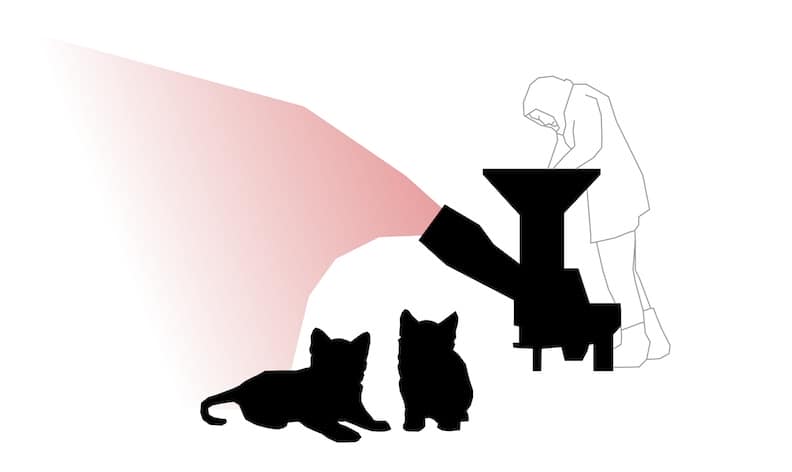
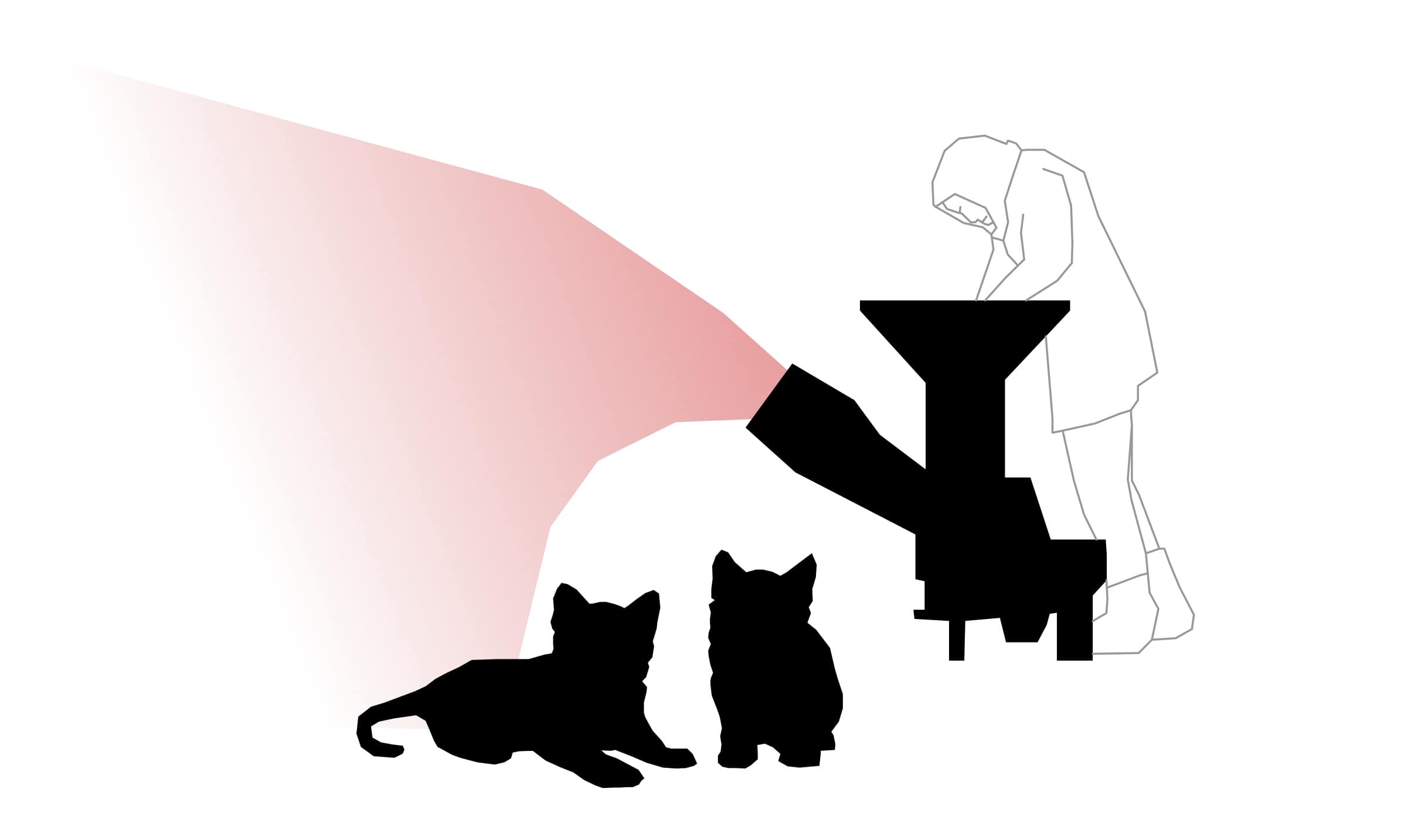
What do fluffy kittens and vile blog posts trashing software have in common? Their hatred for the phrase BIM model.
 In days past, those of us using ArchiCAD or Revit didn’t talk about BIM. We just worked in a superior way to the flatcadders and were happy about it. In fact ArchiCAD 1.0 was released in 1984 and Revit 1.0 came in 2000. The term BIM was only coined in 2002.
Building Information Modeling. Building Information Management.
Building Information Model Management.
Most BIMnerds now write BIM, but a few still want to see BIMM.
It seems like a big trend for us BIMnerds in 2012 has been the transition to saying just BIM instead of BIM model. My earliest awareness of using the acronym BIM without adding Model afterwards (when we’re referring to a file or model and not the overall process) was from Finith Jernigan’s awesome 2007 book BIG BIM, little bim. So this isn’t exactly new, but it is much more pronounced now. I blame social media. BIM experts Case, Inc. and their fluffy kitten explosion meme is a humorous example of this. I also added my support for this correction of terminology with a post on BIM Engine that starts off with a quick quiz. In general, I agree with the correct usage and have made an effort to speak and write correctly.
While we users have become enlightened to the ‘correct’ usage of the term BIM, the software companies making our programs seem less picky. Here’s an example of both Graphisoft and Autodesk using the kitten exploding phrasing. But it’s not just the people writing copy for our beloved software companies. Here a few more examples:
Want to argue about the BIM credentials of those last four links?
Why does BIM Model keep popping up? And why isn’t it as bad as people try to make it? Take a moment to read the Wikipedia entry on RAS syndrome. I’ll quote the critical point:
A limited amount of redundancy can improve (or seem to the speaker to improve) the effectiveness of communication. The pure-logic ideal of zero redundancy is seldom maintained in natural languages, because they have evolved some kinds of redundancy checks. A phonetic example of that principle is the need for spelling alphabets in radiotelephony. Some instances of RAS syndrome can be viewed as syntactic examples of the principle. The speaker wishes to gently reinforce the meaning of an acronym or initialism, especially in pedagogical contexts (whether formal or informal). In such cases, the redundancy may help the listener by providing context and decreasing the ‘alphabet-soup’ quality of the communication.
People outside our BIM world (anyone not using BIM daily, those interested in taking the plunge into ArchiCAD, Revit, etc.) don’t know the code of our secret BIM language. They may not realize that the M in BIM means Model. It’s not going to help our overall progress to berate people for this lack of knowledge. And remember it’s also people who know more about BIM than you or I that use the term as well. So the next time your blood starts boiling over the phrase BIM model, maybe you should think about petting a kitten instead of murdering it.
14 thoughts on “Ownership of the BIM Model”
Jared,
Redundant copy creeps into my writing, over and over again.
Finith
I remember some drafting teachers from both h.s. & Arch school used to spell CADD, I don’t think I’ve ever personally seen anyone spell BIMM. When I have seen it online I just assumed it was a typo
I didn’t see an example on Finith’s page, but then I saw that he comment. So maybe it was removed.
In the spirit of things, I can only say:
ATM Machine
AC current
DC current
PIN Number
GMT Time
GOP Party
HIV Virus
LAN Network
WAN Network
LCD Display
SAT Test
UPC Code and
VIN Number…
So there.
Erik,
Don’t forget:
RAS syndrome
And yes it looks like Finith’s link has been revised (I’m sure I could find another). The links weren’t intended to call anyone out or force changes, merely to show that people whom I consider BIM greats sometimes intentionally or not use that particular pleonastic phrase. And it has zero effect on how much I respect them and their work.
Didn’t someone say “to err is human, to fix divine”?
I believe so! 😉
They also said “to really screw up, you need a computer”
The double D of CADD and double M of BIMM have the same source, really. What is missed from the equation of using technology in the design profession is design. The professionals got identified by the technology, not professional prowess. Still, it is somehow considered “below the stature” for a senior figure to be able to use the technology, let alone be proficient in it! But, the ones who can do both – design AND operate the technology are very keen to pass on the real truth: the real sweet spot is the moment when the technology becomes transparent, and the thought is fully on WHAT, not HOW.
Acronymes can be very dangerous and misleading (IFC for example – Issued For Construction or Industry Foundation Classes?) therefore redundancy is, still, a good engineering practice rather than a filler for an article.
Here is my two cents:
http://whatrevitwants.blogspot.com.au/2011/11/bim-model-bim-model-bim-model-bim-model.html
http://whatrevitwants.blogspot.com.au/2011/12/if-bim-is-process-then-bim-model-is.html
Luke, great links! Thanks for sharing them.
There are other problems with the term (and what it represents).
B: There is no need to say “Building Construction Documents”. We say, “Construction Documents” and it is enough. If we’re working on a building, we all know it, and don’t need a reminder.
I: implies some distinction between the kind of model represented by this term, and some other kind of “non-informational model”. This is a kind of silliness.
This leaves the only operative term as “model”, which is fine, except for the fact that models of any kind, including BIMs, are deficient in an essential way (as are drawings).
http://bit.ly/UsliAP
http://bit.ly/POyb7Z
Rob, great points. Love those two blog posts. Very interested in following and learning more.
All great points but one IMO… Vile post? The points of that post were
1) ‘we’ try not using BIM model and if we do we have fun with it and ourselves. Syntactic redundancy is fine for lay people but I feel we should try to spread the ideal, let others bastardize the terms.
2) the main point was showing AC marketing spin trying to say it’s lacking more complete multi processing isn’t a limitation…even though they agree it is limiting. If that is vile you may need to look up the definition again!
Jay, so two weeks ago I had a thoughtful comment on my blog, calling me out. It went like this:
“A vs R is a needless argument, like BMW vs Mercedes is… It’s the drivers, if all is truly equivelent. You are still playing the “My BIM tool is better than yours” and while other Archi-heads may agree and feel all warm and cozy at your rhetoric, it is shying away from meaningful writing you may have…”
It’s good advice. Can’t remember who wrote it though.
The day we become linear thinkers, with only one viewpoint on a subject, void the ability of seeing the other sides, is the day we stop growing.
I did write that to you but not calling you out, just contributing to a back and forth between several positional viewpoints…of which I hold many depending on many factors including mood and a sense of riling others out of complacency.
The post on multi-processing was an attempt to bring meaningful data to bear, it was trying not to be hollow he-said/she-said…well except for the kittie stuff…that’s just plain fun!!!
No matter how serious sounding or feeling me or anyone else may seem about saying BIM model or any of the others; that is a linguistic debate and in my mind is extremely interesting, as an indication of the human condition…
Just so you are clear; no actual kittens are killed in reality over that…I think it’s called humor, no matter the tinge of supposed seriousness.
Cheek meet tongue.